Finding 1,000 Hours to Write a Book
It takes, on average, 1,000 hours to write a nonfiction book.
At least that's what ChatGPT told me.
Pretty accurate, as according to my own estimate, it took me between 1,000 to 1,200 hours. (For reference, a full-time worker in Germany works 1,353 hours a year on average).
In this article, I want to breakdown exactly where and how I managed to find this time.
But first, I need to clarify something.
A Disclaimer
I do not have kids.
Not that I do not like or want kids. But at this stage, I wouldn't want a parent or carer to read this piece and feel guilty because they're unable to find an extra one thousand hours in their schedule.
Although I did write this book entirely alongside a full-time job, I wouldn't dare compare myself to a busy parent.
I would also not suggest that it's an easy thing to do. It's very hard, and not everybody has the privilege of finding such an enormous amount of time.
So, please make use of the tips below, but don't you dare finish reading my article by feeling guilty.
It's one step at a time for everybody, but not everybody has the same walking space available.
The cuts
If you are a normal human being, it's very unlikely that you will be able to find an extra 1,000 hours without changing anything in your life.
Unless you sometimes sits in void for several hours in a row, some choices will have to be made.
In my situation, I looked for low-hanging fruits first: low value activities that were easy to cut. They either wouldn't have much of an impact on my life, or in some cases would have a positive impact, as they were a waste of time to begin with.
I activated screen time on my iPhone.
Daily average: 3 hours.
Perfect.
I needed a base of 2 hours a day for the next year. If consistent over 365 days, that is 730 hours right there for the taking.
I took my phone and deleted Instagram, Facebook, LinkedIn, and a few other apps that were at the top of the screen-time leaderboard.
But I didn't just cut apps.
I also replaced them.
The adds
It's great to cut social media and find extra hours.
But this alone wasn't going to give me time. It created a void, but a void on its own isn't useful.
The next step was to replace these apps with others. The be intentional about the time made available.
Otherwise, I was running the risk of having this newfound time being eaten up by other aspects of my life.
At the bottom of the iPhone are your for most used apps.
I changed mine.

Apps at the bottom of my iPhone.
Apps at the bottom of my iPhone.
I put Pages, where I was writing my drafts and research.
Notes, where I'd put my random ideas for the book.
Google Maps, because I use it all the time.
And, finally Strides.
And I need to tell you a bit more about Strides.
Strides
I downloaded Strides as it's a tracking app. It allows you to set a goal and log your progress, day by day.
At first, I only tracked my hours working on the book. However, I pretty quickly transitioned to words written, an actual outcome.
I first logged 500 words on February 6th 2024.
After that, I have been pretty consistent, writing every day for a year, missing only a day or two.
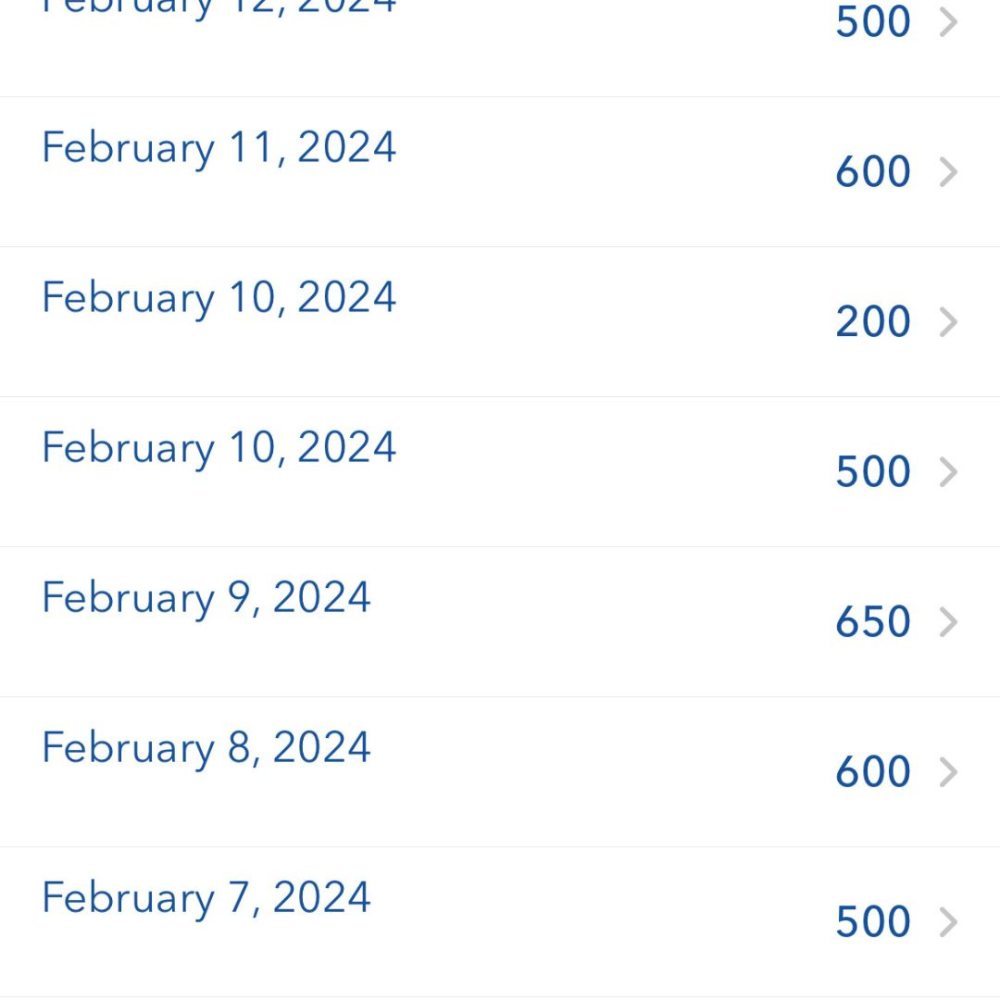
Log book from Strides.
Besides a strong structure and framework, Strides also encouraged me. When writing a book every day can seem like the other. It's easy to lose sight of the bigger project as you work line by line, paragraph by paragraph.
As I set a 100,000 words goal, Strides showed me my performance, and gave me a projected end based on my cadence.
This significantly improved my motivation, and my performance.
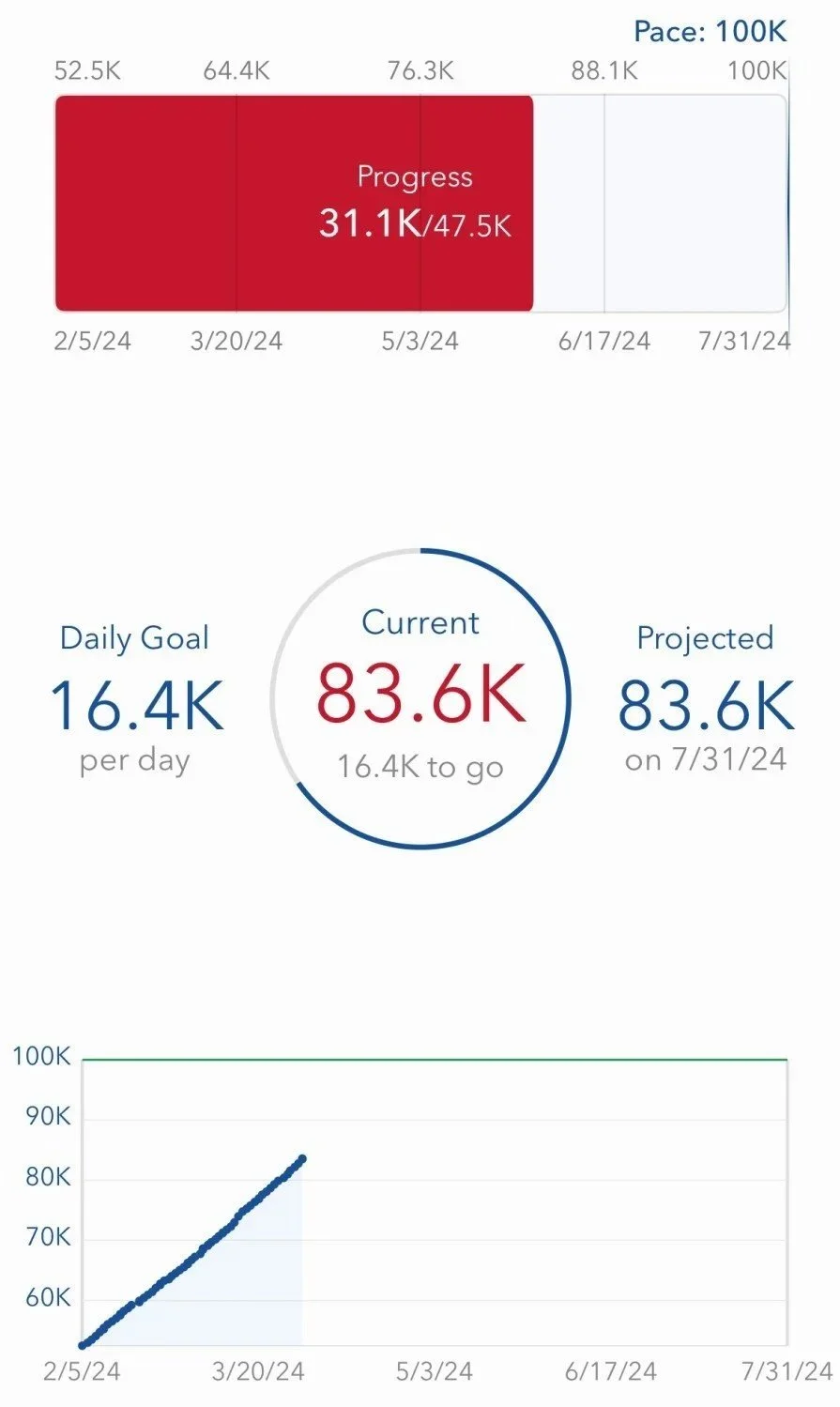
Charts in Strides.
This was great, as I was making good use of these daily two hours gained from social media.
But it still wasn't enough.
I needed more hours to reach my goal.
Weekends
Weekends were my wildcard. My main investment portfolio.
Now, if you remember, we're still only at 730 hours by working on the book two hours a day for a year.
That is still 470 shorts.
But luckily, in the 1938, the Fair Labor Standards Act passed in the United-States, and with it, the five-day workweek started spreading across the world.
Which gave me two full extra days.
And I used them diligently.
I sometimes worked ten hours on the book during a weekend day. However, most often, I'd say my average was lower, perhaps four to five hours each day.
If I worked on the book an extra three hours from the existing two on Saturday and Sunday, this gives us 312 hours over the year, reaching 1,042 hours in total.
We're getting there.
Other places
In the evening after dinner, and on weekends, were my two main time banks to work on the book.
But, I have also worked on it:
While traveling for my holidays
Going to places in my city
On bank holidays
On my birthday
At the gym
And some other pockets of free time. I can still remember some of the moments in the book written while traveling to South Korea, Malaysia, or Indonesia.
I planned my holidays to have writing time blocked out.
Nothing could escape Strides and its daily tracking.
The Bonus
The last couple of hundred hours came from an easy lifestyle adjustment.
I've read on a daily basis for the past few years.
Several hundreds of books in total.
I love reading, and so, for the duration of writing this book, I have predominantly read books as part of the research for the book.
I used my Kindle, highlighted sections, and took notes.
This existing reading time, that I'd already allocated in my daily life for years, was a good credit line.
It was difficult, as I had to give up on exciting new titles I desperately wanted to read, but it made a large difference to my productivity.
You'll need the hours
So, this is it.
There's no secret.
Writing a book takes time.
Usually, it takes more time than expected.
Averages are good to plan and intentionally give yourself the space to successfully complete your project, but yet, nothing is given.
From my experience, you will need the hours, but still, you might get stuck and still require even more time.
Likewise, taking a break and catching up later on may also add a boost of productivity.
Everybody is different when it comes to writing.
But there's one thing I will stand by.
You'll need the hours.
The book will take a tremendous amount of time. So humble advice would be to start looking and planning exactly where will this time come from.
In that way, you put all the chances on your side.
Good luck!
P.S. If you're currently thinking about writing a book, let me know when it is out.
[This article was originally published on LinkedIn on July 22, 2025]
